


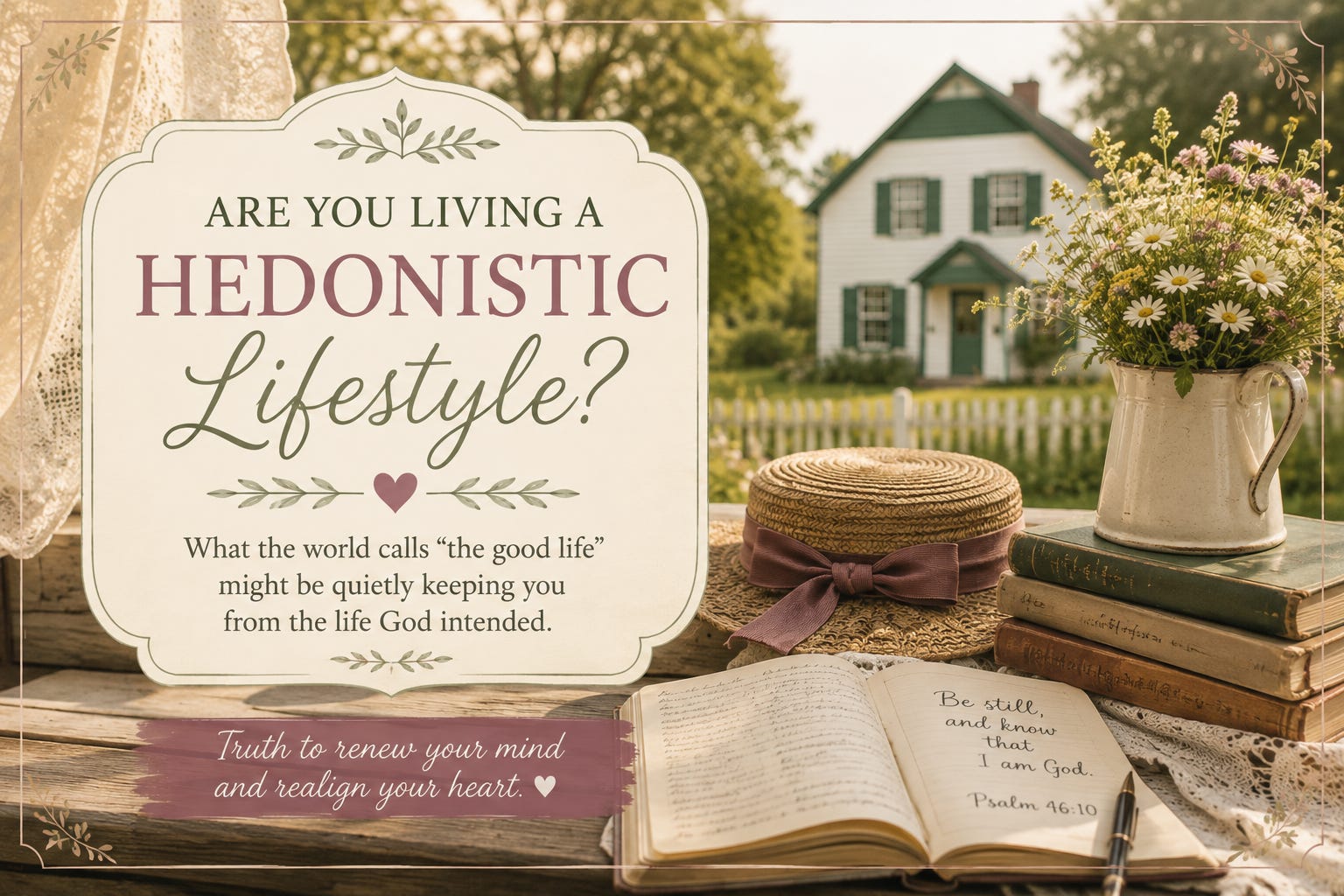
We live in a culture that constantly tells us that happiness is just one purchase, experience, achievement, or upgrade away.
A better house.
A better vacation.
A better body.
More comfort.
More experiences.
More pleasure.
The message is subtle, but it’s everywhere: your happiness is the highest goal.
But if pleasure and comfort are really the things that satisfy us, why do so many people who have everything still feel empty?
Jesus gave us a very different perspective when He told us not to store up our treasures on earth, but to store them in heaven. Where our treasure is, He said, our hearts will be also.
That makes me wonder: What has my heart?
What Moses Knew About Life
Psalm 90 gives us a fascinating perspective because it was written by Moses—a man who had experienced radically different ways of living.
He knew what it was like to live with very little. He also knew what it was like to live surrounded by the wealth, education, and comforts of Pharaoh’s household.
And after experiencing both, Moses prayed:
“So teach us to number our days, that we may gain a heart of wisdom.” — Psalm 90:12
Moses understood something our culture desperately needs to remember:
Life is short. Eternity isn’t.
We can spend our lives chasing pleasure, success, comfort, recognition, or possessions—but eventually, every one of us will stand before God.
That doesn’t mean enjoying God’s good gifts is wrong.
It means those gifts were never meant to become our treasure.
When temporary things become the source of our identity, security, or happiness, we’ve given them a place they were never meant to occupy.
Two Questions That Can Change How You Live
Moses gives us a simple framework for living wisely in a culture obsessed with pleasure.
1. Remember how short life is.
Seventy or eighty years can feel like a long time while we’re living them.
But compared with eternity, our lives are incredibly brief.
That perspective changes the questions we ask.
Instead of:
“Will this make me happy?”
we begin asking:
“Is this worth my time?”
Instead of:
“What do I want?”
we ask:
“What does God want?”
And instead of building our lives around temporary pleasures, we begin investing in things that will last.
2. Ask yourself: “Will this matter in eternity?”
This may be one of the simplest questions we can ask ourselves.
Will this matter 100 years from now?
Better yet:
Will this matter in eternity?
Not every decision has eternal consequences, of course. But this question can expose how easily we allow temporary things to consume our attention.
Our culture says:
“Live for today.”
Scripture teaches us to live with eternity in view.
And when Christ becomes our greatest treasure, something beautiful happens.
We no longer need the world to tell us what will make us happy.
We don’t have to chase every new experience.
We don’t have to prove our worth through possessions or accomplishments.
We can enjoy God’s blessings without making them our god.
Because our identity, security, and ultimate hope are found somewhere far more lasting.
In Christ.
So today, number your days.
Look beyond what is temporary.
Ask yourself what will matter forever.
And choose your treasure wisely.
I unpack this idea more fully in my original article, including how to live wisely in a culture that continually tells us to pursue pleasure and make our own happiness the highest goal:
Read the full article: How to Live Wisely in a Hedonistic Culture →
This really made me think, especially the question, “What has my heart?” I don’t think enjoying comfort, beauty, travel, good food, or meaningful experiences is wrong—but they become a problem when we start asking temporary things to give us the identity, security, or fulfillment only God can provide. I also really appreciated the reminder from Psalm 90 to number our days and live them wisely.
This was good for me to sit with. Am I sowing into eternal things or temporal things? I want to invest in the eternal!!